- Home
- Gas geyser installation
15 years of plumbing in Kempton Park
Gas Geyser Installation
Kempton Park
Gas geyser installation in Kempton Park starts outside: where the cylinders may legally stand decides where the geyser goes, and the gas line is leak-tested before it is lit.
Six parts of a gas geyser job, each with its own rule
Gas and water meet at the geyser, so the job covers both sides and ends with a certificate.
The cylinder spot
Measured first against the SANS 10087-1 distances from drains, manholes, low openings and the boundary, before anything is bought or mounted.
The geyser and its flue
Mounted where the cylinder spot and the pipe route allow. In a bathroom, a conventional gas geyser has to be flued outside, with permanent ventilation.
Gas line and regulator
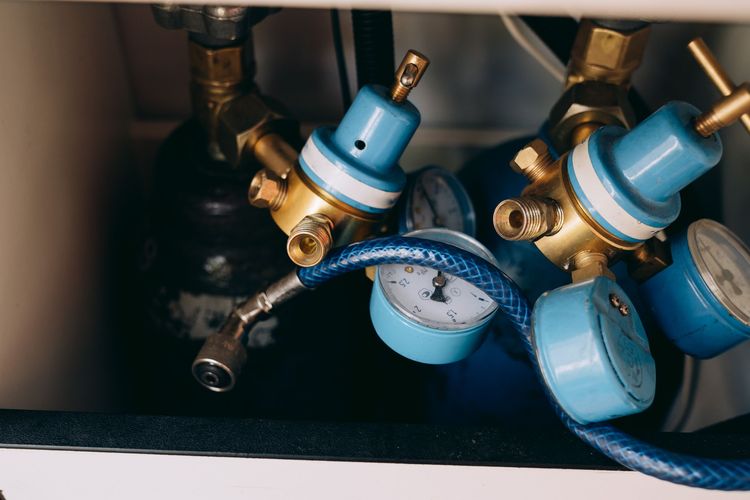
The run from the cylinders to the geyser, with its regulator and shut-off, leak-tested before the geyser is lit.
Water connections
Cold supply in and hot water out to the taps, joined to the house plumbing with an isolating valve so the geyser can be worked on later.
Changing over from electric
The electric geyser isolated or taken out, and the hot-water pipes re-routed from the new unit where they need to be.
Certificate of conformity
Issued by an authorised person once the installation is complete, as the Pressure Equipment Regulations require.
Two metres from the manhole, one from the airbrick
Gas water heating has its own Kempton Park reasons. In May 2025, after major outages in Van Riebeeck Park, Terenure, Kempton Park West, Edleen, Spartan, Cresslawn, Pomona and Bredell, the City's chief area engineer said: "The main causes of these power outages are cable theft and load-shedding." In January 2026 parts of Spartan, Cresslawn, the CBD, Van Riebeeck Park, Birch Acres and Terenure were without power again. Nationally, LPG outlets told SABC News in April 2023 that more people were buying gas for water heating, gas geysers included, as rolling blackouts intensified.
Whatever the reason, the geyser is the easy part to place. The cylinders are not. SANS 10087-1 (2008 edition) says gas containers must stand at least 1 metre from any door, window or airbrick below the level of the cylinder valve, at least 2 metres from any drain, pit or manhole, and at least 3 metres from the property boundary unless the boundary has a firewall. Where there are only two containers, that boundary distance can come down to 1 metre.
There is a rule overhead as well: 3 metres from any opening directly above the cylinders, unless a non-combustible roof separates them. Indoors, the same standard says a conventional gas geyser in a bathroom "shall be flued to the outside", with permanent ventilation. Walk round a house with those numbers and the legal spots can shrink quickly, because the gully outside the kitchen counts as a drain and every low window and airbrick takes a metre around it.
So the order of work matters. The cylinder spot is found first, the geyser goes where a sensible gas line can reach it from there, and the flue route follows. Choosing the geyser position indoors first can leave the cylinders with nowhere legal to stand, or with a long gas line across the property. The paperwork sits on top of that: under the Pressure Equipment Regulations only an authorised person may install a gas appliance, and a certificate of conformity follows completion.
Before you buy a unit, take a tape measure outside. Measure from each possible cylinder spot to the nearest gully, manhole, low window, door, airbrick and boundary wall, and note anything directly above it. If no spot passes, the options are a different wall, a firewall at the boundary, or a longer gas line to a spot that works, and each one changes the price.
Find the cylinder spot before you choose the geyser: 2 metres from drains and manholes, 1 metre from low openings, and 3 metres from the boundary unless there is a firewall. The rest of the installation follows from that spot.
What a gas geyser site visit usually turns up
Read across: the situation at the house, the rule or fault behind it, and what the installation needs.
Gas geysers, Kempton Park homes
| What you notice | What it usually is | What it needs |
|---|---|---|
| The only free wall has the kitchen gully beside it | Inside the 2 m distance from a drain | Another wall, or a longer gas line to a spot that passes |
| Cylinders wanted against the boundary wall | Closer than 3 m, with no firewall | A firewall, two cylinders at 1 m, or another spot |
| Geyser wanted in the bathroom | Allowed only if flued outside, with permanent ventilation | Flue route planned before the unit is chosen |
| Gas odour by the bottles when the geyser runs | A leaking joint, hose or regulator | Cylinder valve shut, area aired, every joint leak-tested |
| Soot or scorch marks above the geyser | Poor combustion or a blocked flue | Geyser left off until burner and flue are checked |
A spot that fails the distances is not a spot. The gas line can move; the distances cannot.
Four commitments on a gas geyser job
Built on what people say goes wrong: a price that grows, a certificate that is slow to arrive, and nobody answering afterwards.
The spot agreed before the price
You and the plumber agree where the cylinders will stand, measured against the code, before a quote is written. The geyser position follows from it.
Gas and water on one quote
Unit, gas line and regulator, flue, water connections and the certificate are separate lines on the price you accept, so no part of the job turns up later as an extra.
Lit and run in front of you
The gas line is leak-tested before the geyser is lit, and the geyser is run at a hot tap with you there to see it.
The certificate with the invoice
The certificate of conformity is handed over with the invoice. If the geyser gives trouble later, the same form reaches the people who fitted it.
Four steps from tape measure to a lit burner
Nothing is bought or drilled until the cylinder spot and the price are agreed with you.
Request a call-out
Use the form: what heats your water now, how many bathrooms you have, and where you picture the cylinders. The return call covers the site-visit charge before anything is booked.
Measure the outside
Possible cylinder spots are measured against drains, manholes, low openings, the boundary and anything overhead. The geyser and flue positions follow.
Price both sides
Unit, gas line, flue, water connections and the certificate are priced in writing. The booking waits for your yes.
Fit, test, certify
The water side is connected, the gas line leak-tested, and the geyser lit and run at the taps. The certificate of conformity comes with the invoice.
Related work in Kempton Park
Before you switch to gas in Kempton Park
Ask anything about gas in the call-out form, and it gets an answer before a visit is booked.
Apart from the unit itself, what is in the price of a gas geyser job?
The gas line and regulator, the flue, the water connections, any change-over from the electric geyser, labour and the certificate of conformity. Each is a line on the written quote, which comes after the cylinder spot has been measured.
As a market guide only, a June 2026 price guide from energybee.co.za puts an installed 12 L/min gas geyser at R5,500 to R8,500 and a gas certificate at R600 to R1,000. Those are not this site's prices, and how the site visit is charged is set out on the plumbing prices page.
With the power cuts in Esther Park and Terenure, is gas better than an electric geyser?
For hot water during an outage it can be, because the heat comes from the gas. Before buying, ask whether the model you like needs mains power to light.
The City named cable theft and load-shedding as the main causes of the May 2025 outages, and in 2023 LPG outlets reported more households buying gas for water heating as blackouts intensified. The trade-offs are space and refills: gas needs a cylinder spot that passes SANS 10087-1, and an electric geyser does not. If no legal spot exists, that settles it.
There is no spot in our yard two metres from a drain. Can we still have gas?
Possibly, but not with the cylinders inside that 2-metre zone, which SANS 10087-1 sets around any drain, pit or manhole. The ways round it are another outside wall, or a longer gas line to a spot that does pass.
The yard gully, the sewer manhole and any stormwater pit all count, so measure from each. If nothing on the property passes, an electric geyser or a solar geyser is the honest answer.
We would like the gas unit inside, next to the shower. Is that allowed?
It can be, if it is flued to the outside. SANS 10087-1 (2008 edition) says a conventional gas geyser in a bathroom "shall be flued to the outside", with permanent ventilation provided.
That makes the bathroom's outside wall the deciding factor: the flue has to get out through it, and the cylinders still need their own legal spot outside. Both are checked on the visit before a unit is chosen.
Our side passage runs along the boundary. Can the gas bottles go there?
Only at the right distance, or against a firewall. SANS 10087-1 asks for 3 metres from the property boundary unless the boundary has a firewall, in which case the containers may stand next to it, and with only two containers the distance can come down to 1 metre.
In a narrow passage the 1-metre rule from low doors, windows and airbricks can rule a spot out as well, so the plumber measures both before suggesting it.
I have already bought a gas geyser. Will you fit it?
Yes, if it can be installed to the code where your cylinders can stand. Have the model name ready for the phone-back so it can be checked before the visit.
The flue route and the cylinder spot decide whether it works in your house, so they are measured first. If the unit cannot go where it needs to, you are told before any work starts.
Who signs off the gas side once it is fitted?
An authorised person, who issues a certificate of conformity. The Pressure Equipment Regulations say only an authorised person may install a gas appliance and that a certificate of conformity follows completion, and the LPG Safety Association says an installer must issue a certificate when an LPG installation is finished.
Here the certificate is handed over with the invoice. Keep it with the house papers.
I smell gas near the cylinders when the geyser fires. What do I do?
Stop using it. Close the valve on the cylinder, keep flames and switches away, let the area air, and send the form so the joints, hose and regulator can be leak-tested before it is lit again.
If the smell is strong or inside the house, get everyone out and phone for help: the numbers Ekurhuleni lists for life-threatening emergencies are 10177, or 112 from a cellphone.
Where we work
Every suburb inside Kempton Park, from Birchleigh North down to Bonaero Park on the airport fence.
- Kempton Park CBD
- Allen Grove
- Aston Manor
- Birch Acres
- Birchleigh
- Birchleigh North
- Bonaero Park
- Bredell
- Cresslawn
- Croydon
- Edleen
- Esther Park
- Glen Erasmia
- Glen Marais
- Isando
- Kempton Park West
- Nimrod Park
- Norkem Park
- Pomona
- Rhodesfield
- Serengeti
- Spartan
- Terenure
- Van Riebeeck Park